Ant colony management addresses the biological source of infestations rather than visible foraging worker ants. When foraging ants enter a kitchen or bathroom, destroying visible specimens fails because queen ants in…
Ant colony management addresses the biological source of infestations rather than visible foraging worker ants. When foraging ants enter a kitchen or bathroom, destroying visible specimens fails because queen ants in the central nest continuously produce replacement broods. A surface spray application often triggers a biological survival process known as budding, particularly in odorous house ants and pharaoh ants, where a single colony divides into multiple distinct satellite colonies throughout wall cavities. Technical remediation requires non-repellent transfer agents. Foraging workers traverse these slow-acting materials, carry the active chemistry across cuticular contact back into the structural voids, and transfer the payload directly to the queen and larvae through trophallaxis.
In older Springfield neighborhoods such as Enos Park, Vinegar Hill, and the Historic West Side, residential structures frequently feature soft timber framing, fieldstone foundations, and historic moisture intrusion around sash windows. These conditions provide optimal microclimates for carpenter ants (Camponotus pennsylvanicus), which excavate galleries in softened wood framing near gutters, roof valleys, and crawl spaces. Properties near Lake Springfield, Twin Lakes, and heavily wooded parcels across Leland Grove and Hawthorne Place face continuous seasonal migration from outdoor parent colonies nesting in decaying oak trees and landscape timbers. When exterior satellite nests migrate indoors seeking indoor warmth and humidity, simple perimeter repellant barriers leave interior structural galleries intact.
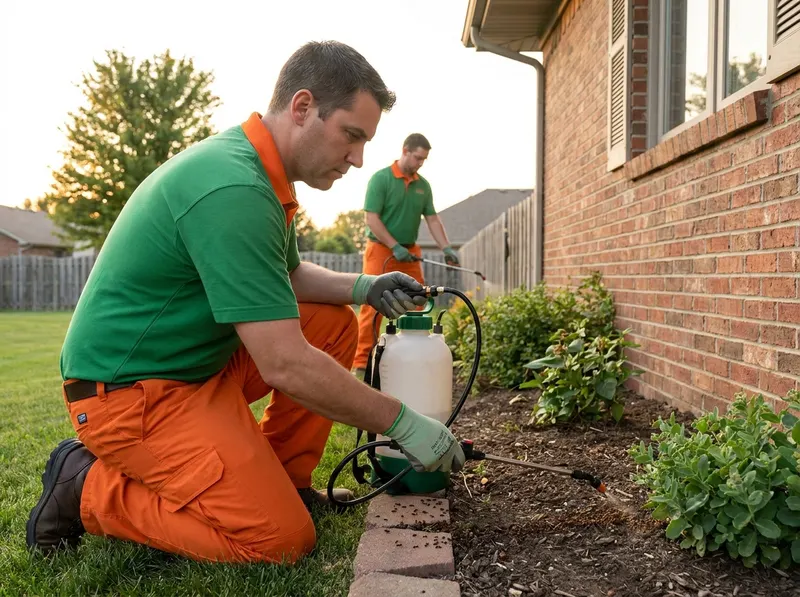
Effective structural relief follows an exact operational protocol. Technicians map foraging trails back to primary moisture sources, access wall plates, and apply dry micro-dusts or gel baits directly into wall voids without chemical vapor dissipation into indoor living areas. Next, exterior foundation perimeters receive a low-pressure application of non-repellent liquid along the continuous concrete or masonry band up to 18 inches above soil level. Finally, weep holes, plumbing pipe penetrations, and door thresholds are identified for mechanical caulking and physical exclusion. Homeowners with slab foundations in Westchester or Jerome encounter pavement ants nesting beneath sub-slab heating ducts, which requires targeted sub-slab injection rather than standard crawl space dusting. Accurate bait uptake requires zero competing food sources for 72 hours following treatment to guarantee colony collapse.
Every job gets a firm, written price after a free on-site visit.
Tell us about your ant colony management job in Springfield and we'll send a clear, written quote, usually the same day.
 Savero Pest Patrol