Flea and tick environmental control addresses the biological mechanics of active infestations through targeted Integrated Pest Management (IPM). Properties near wooded corridors around Lake Springfield or older…
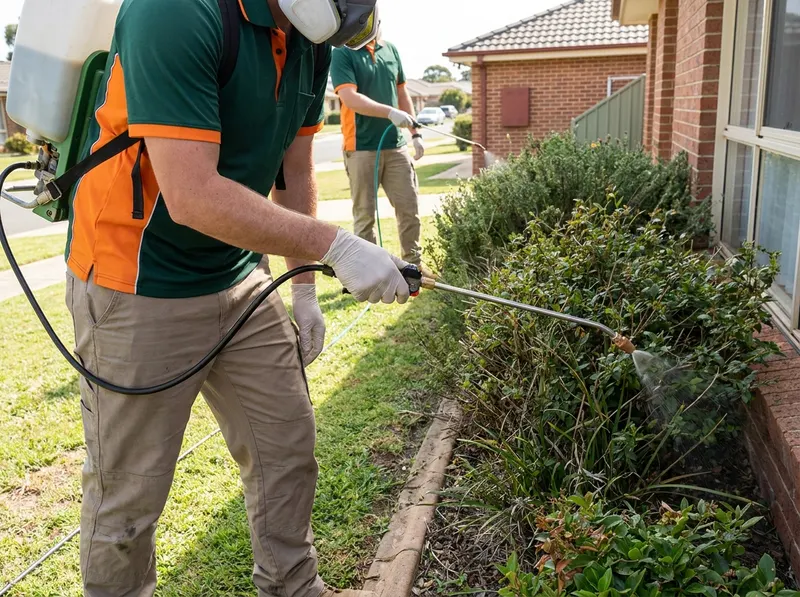
Flea and tick environmental control addresses the biological mechanics of active infestations through targeted Integrated Pest Management (IPM). Properties near wooded corridors around Lake Springfield or older residential zones with dense shade canopies like Hawthorne Place and Enos Park experience sustained parasite pressure from urban wildlife, including raccoons, opossums, and white-tailed deer. Instead of saturating living areas with standard surface sprays, technical control utilizes an Insect Growth Regulator (IGR) such as pyriproxyfen combined with a photo-stable outdoor synthetic pyrethroid. The IGR breaks the egg-to-pupa transition, while the adulticide controls mature biting vectors. In contrast to over-the-counter broadcasts that degrade within 72 hours under central Illinois rain, microencapsulated formulations adhere to organic yard thatch and soil substrates for approximately 30 to 60 days.
Decision guidance dictates structural environmental suppression when adult parasites persist despite topical veterinary applications on household animals. If biting pests are confined to a single domestic animal without visible turf or rug activity, a clinical veterinary preventative provides the correct standalone path; however, once larvae inhabit carpet fibers, floorboard cracks in historic homes across Vinegar Hill, or low-lying shrubs in Westchester and Leland Grove, comprehensive environmental management becomes necessary. The operational trade-off requires absolute indoor preparation: all flooring must be cleared and vacuumed prior to technical application, and treated surfaces require complete drying (typically 120 to 180 minutes) before family members or animals walk on treated zones.
Properties in Laketown, Jerome, and the Historic West Side frequently feature detached garages, brick foundations, and perimeter ground cover where questing ticks congregate. Technical protocol follows a 4-step sequence: 1. Property mapping to locate shaded larval breeding grounds and structural foundation gaps. 2. Vacuum containment extraction of indoor resting pupae. 3. Application of liquid residual barriers to outdoor transition borders between mowed lawn and unmanaged brush. 4. Interior crack-and-crevice spot-treatments aimed at sub-floor expansion joints. Exterior operations focus strictly on shaded, high-humidity harborage zones under tree lines rather than non-target open lawn in direct midday sunlight, optimizing material effectiveness and preserving beneficial turf insects.
Every job gets a firm, written price after a free on-site visit.
Tell us about your flea and tick environmental control job in Springfield and we'll send a clear, written quote, usually the same day.
 Savero Pest Patrol