Rodent management in central Illinois requires separating physical exclusion from temporary chemical baiting. Interior snap traps and multi-catch stations capture resident populations within 72 hours, avoiding outdoor…
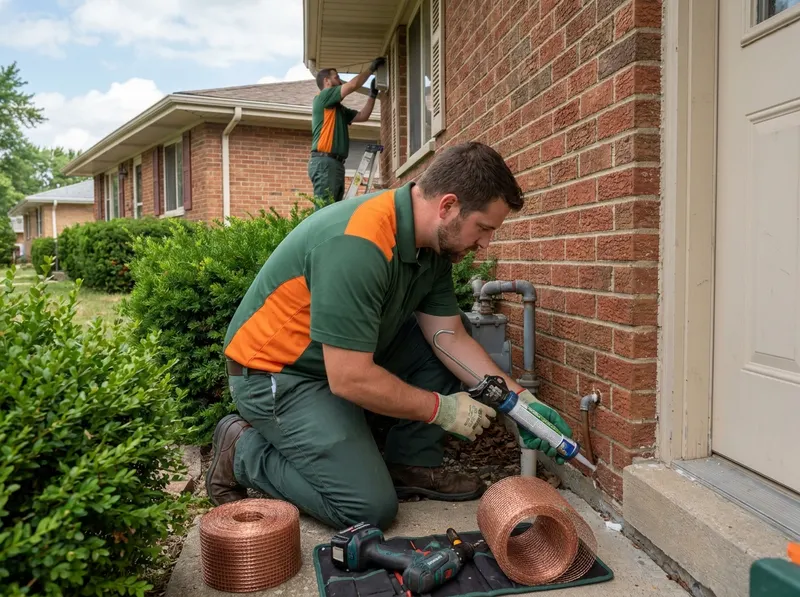
Rodent management in central Illinois requires separating physical exclusion from temporary chemical baiting. Interior snap traps and multi-catch stations capture resident populations within 72 hours, avoiding outdoor poison blocks that risk non-target secondary poisoning to local birds of prey or domestic pets. Mice require an opening of only 0.25 inches (roughly the diameter of a standard pencil), while adult rats enter through 0.5-inch gaps. Physical abatement stops the cycle by sealing utility penetrations, foundation sill plates, subfloor vents, and corner trim with 19-gauge galvanized hardware cloth, copper wire mesh, and polyurethane foam backing. This mechanical barrier prevents future foraging runs from outdoor vegetation and neighboring sewer connections.
Older architectural layouts in Springfield create predictable structural vulnerabilities. In Historic West Side, Enos Park, and Vinegar Hill, Victorian and early-twentieth-century residential construction features stone masonry foundations, unsealed mortar joints, and balloon framing that allows rodents to travel unobstructed from basement crawlspaces to second-story attics. In suburban split-levels and ranch homes throughout Westchester, Leland Grove, and Jerome, rodents enter via ground-level AC line chases, garage door bottom sweeps, and low weep screeds. Water-adjacent properties near Lake Springfield, Twin Lakes, and Laketown experience seasonal rodent pressure during harvest season and late autumn freezes, driving field populations toward crawlspace access doors and perimeter fascia boards.
Choosing permanent exclusion over periodic chemical application involves specific physical trade-offs. Bait-only maintenance services cost less upfront per visit but fail to remediate the underlying exterior breeches, leaving attic wiring and fiberglass insulation vulnerable to continuous chewing, urine tracking, and fire hazards. Complete exclusion demands structural sealing labor and exterior hardware installations, resulting in a higher initial expenditure that eliminates ongoing monthly chemical contracts. If active gnawing occurs inside finished drywall or drop ceilings, mechanical trapping paired with full structural gap closure is required; if structural rot has softened fascia or rim joists, carpenter repairs must accompany perimeter flashing to maintain rodent-free integrity.
Every job gets a firm, written price after a free on-site visit.
Tell us about your rodent exclusion and abatement job in Springfield and we'll send a clear, written quote, usually the same day.
 Savero Pest Patrol